
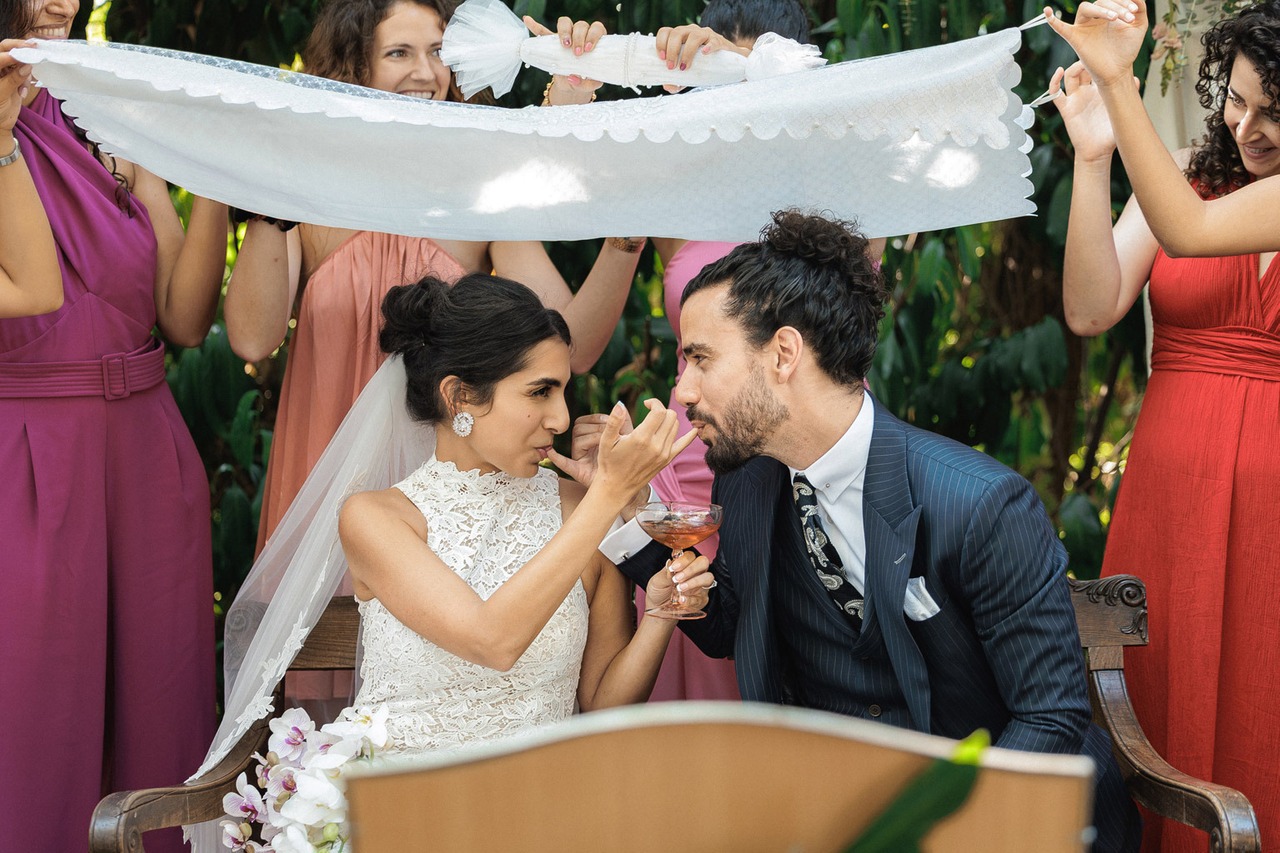
Choosing a Wedding Photographer in Portugal: A Practical Guide for Foreign Couples (2026)
TL;DR: This guide is the questions to ask, the red flags to watch for, and the realistic price ranges for wedding photography in Portugal in 2026. It’s written for foreign couples who don’t know the local market and want a starting framework. Coverage runs from €1,500 (small elopements with newer photographers) to €8,000+ (top-tier destination wedding specialists). The most important factor isn’t the camera or the gear — it’s whether the photographer’s portfolio shows the kind of moments you actually want from your day. Written by a documentary wedding photographer based in Porto.
This is the post couples ask me to write. “How do we choose a wedding photographer in Portugal? We’ve never planned a wedding before. We’re not in your market. How do we even start?”
I’ll give you my actual answer below. I’m declaring my bias up front: I’m a documentary wedding photographer based in Vila Nova de Gaia (across the river from Porto). I’ve shot 200+ weddings in Northern Portugal over 15+ years, including for foreign couples. I’m not the right photographer for everyone — and a useful guide will help you figure out whether I am or not, and if not, point you toward what kind of photographer is.
What follows is the framework I’d want my own niece to use if she were getting married in Portugal and didn’t know me.
The first question to answer (about yourself, not the photographer)
Before you compare photographers, answer one question: what kind of photos do you want when you look back on this day in twenty years?
There are three honest answers, and each points to a different kind of photographer:
1. “I want to remember exactly how everyone looked, and to recognize each guest in their best light.”
This is traditional wedding photography. Posed group shots, formal portraits, lots of attention to flattering angles and clean backgrounds. Wedding magazines love this style. Strong portfolios will show controlled lighting and clean compositions.
2. “I want to remember what the day actually felt like — the laughter, the tears, the small moments I missed because I was distracted.”
This is documentary or photojournalistic photography. Unposed, unstaged, focused on emotion. Strong portfolios will show real expressions, candid interactions, and storytelling sequences (not just isolated portraits).
3. “I want my photos to look like a magazine shoot — beautiful, stylized, almost cinematic.”
This is fine art or editorial wedding photography. Heavy direction, controlled poses, attention to fashion and styling. Strong portfolios will look more like fashion editorials than memory albums.
Most modern weddings combine elements of all three, but each photographer leans heavily toward one. Look at their full galleries (not just curated highlights) and ask yourself: which style is dominant?
If you don’t know which you want, that’s fine. Look at five photographers’ full galleries and notice which one makes you feel something. That’s a strong signal.
What weddings cost in Portugal in 2026
A realistic price map by tier:
€800-€1,500 — Newer photographers, elopement-only, or limited coverage.
Often 4-6 hours, ceremony only. Could be a fine choice for very small weddings if the portfolio aligns. Risk: less experience handling unexpected situations.
€1,500-€2,800 — Mid-range Portuguese wedding photographers.
Typically 8-10 hours, second shooter optional, usually delivers within 6-8 weeks. Most local weddings in Portugal book at this tier. Foreign couples should check whether the photographer has actually worked with international guests — it matters for communication and timing.
€2,800-€4,500 — Established documentary or editorial photographers.
Full-day coverage, second shooter common, typically 700-1200 final images. Most photographers in this range have 5+ years of full-time experience and have shot at the named venues (Yeatman, Quinta Pacheca, etc).
€4,500-€8,000+ — Top-tier destination wedding specialists.
Multi-day coverage (welcome event Friday, wedding Saturday, brunch Sunday). Often includes engagement session. Usually 2 photographers + 1-2 videographers. International publication record (Junebug, Wedding Sparrow, etc).
These ranges are total package costs in 2026, including editing and digital delivery. Print packages, albums, and prints are typically extra (€400-€2,500).
For comparison: foreign-based destination wedding photographers flying to Portugal typically charge €5,000-€12,000 plus travel. Budget difference between local and international photographers in Portugal is real and significant.
A more detailed budget breakdown for the full wedding is in my wedding budget calculator.
What to look for in a portfolio
Beyond style, here’s what I’d actually examine:
Full wedding galleries, not just highlights.
A photographer’s curated 30-image portfolio shows their best work. A full 800-image wedding gallery shows their consistency. Ask to see at least one full wedding gallery. If they decline, that’s information.
Coverage of the parts you care about.
Some photographers have stunning portrait work but weak ceremony coverage. Others are documentary geniuses but their group shots are messy. Look at all parts of the day in their full galleries: getting ready, ceremony, family portraits, reception speeches, dancing.
The boring moments.
Look at how they photograph the in-between parts of the day — guests arriving, the hour after the ceremony, late dancing. Documentary photographers earn their fee here. Anyone can shoot a sunset portrait.
Faces, especially of guests.
Wedding guests’ expressions tell you whether the photographer was paying attention. If the guests in their portfolios all look similar (all smiling, all looking at the camera), the photographer was directing rather than observing.
Light handling at your kind of venue.
A photographer who’s only shot at sunny outdoor venues might struggle in a dim quinta interior. A photographer who’s only shot at hotel ballrooms might miss outdoor light. Make sure their portfolio includes venues similar to yours.
Recent work, not just career highlights.
Styles drift over time. A photographer who shot their best work five years ago may have shifted style since. Ask for galleries from the last 12 months.
Questions to ask in the first conversation
These cut through marketing fast:
- How many weddings have you photographed in the last 12 months? Less than 10 = part-time or new. 10-25 = full-time. 25-40 = experienced. 40+ = at capacity, possibly stretched.
- Have you photographed at [my venue] before? If not, will you visit beforehand? Familiarity with the venue saves real time on the wedding day. If they haven’t been there, professional photographers visit in advance.
- Can you walk me through how you work with couples who feel awkward in front of the camera? Most foreign couples feel some awkwardness. The good answer is specific (techniques, examples). The vague answer (“I just make them feel comfortable”) is a yellow flag.
- What’s your backup plan for equipment failure? Two cameras minimum is the professional standard. Two of each lens is better. Cloud-based instant backup of memory cards is increasingly standard.
- Can I see the full gallery from a wedding similar to mine? Specific request. The right answer is yes.
- What’s your average delivery timeline for the full gallery? 6-8 weeks is standard. 4-6 weeks is fast. 12+ weeks is slow but not necessarily a red flag if you’re informed in advance.
- Do you have insurance? Public liability and professional indemnity are standard. Some venues require it.
- What happens if you can’t make it on the day? Illness, family emergency, accident. Top photographers have a network of associates ready to step in. Solo photographers without backup is a real risk.
- How do you handle multicultural / multi-faith ceremonies? If yours is. Specific experience matters more than general assurance.
- What’s not included in the price you quoted? Travel beyond a certain distance, second shooter, raw files, prints, albums, additional coverage hours. Ask explicitly so there are no surprises.
Red flags to walk away from
Listen for these in your first conversation:
Pressure to book quickly without seeing a contract.
Real photographers send contracts. Pressure to deposit before paperwork is a scam pattern.
No clear cancellation or refund policy.
What happens if you cancel? If they cancel? If the wedding is postponed? Vague answers cost you money later.
Portfolios that all look identical to other photographers.
Either they’re using template editing, buying presets, or copying styles. A photographer with no distinct visual voice will give you generic results.
Discomfort with seeing full galleries.
Highlighted-only portfolios protect weak weddings.
Strong “we’ll work it out closer to the day” energy.
Top photographers have a structured process — engagement consultation, timeline planning, family list collection, vendor coordination. If they seem to be making it up as they go, they probably are.
Inconsistent communication.
Take 2 weeks to reply now = they’ll do the same after you’ve paid. Document the response time.
Unwillingness to provide references from past couples.
Top photographers will connect you with 1-2 past couples on request. Hesitation here matters.
Photographers vs photo + video teams
A common decision: do you want photo only, or photo + video?
Photo only is the cheaper path. Modern wedding photos are typically delivered in a way that supports easy slideshow video creation later if you want.
Photo + video roughly doubles your investment. Video adds an entirely different memory layer — the actual sound of the ceremony, the speeches as spoken, the dancing in motion. About 60% of foreign couples I work with choose photo + video.
If you go for both, two options:
Photo + Video from the same studio/team. Coordinated artistic vision, smoother day-of operations, single point of communication. This is what I do — I work with a team that includes videographers I’ve shot alongside for years. The advantage is that we know each other’s working rhythm and don’t get in each other’s frames.
Separate photographers and videographers. Wider style options, sometimes lower combined cost, but coordination becomes your responsibility. Works fine for couples who do their homework on both teams.
If you’d like to know more about how my own team handles photo + video, the destination wedding photographer guide covers our typical setup.
Booking timeline
When to book by:
- Peak Saturdays in May/June/September: 12-18 months ahead at top photographers
- Shoulder season weekends (April, October): 8-12 months ahead
- Off-season (Nov-March): 4-6 months ahead usually fine
- Friday/Sunday weddings any season: Often available 6-9 months ahead
For destination wedding-specific photographers, peak dates fill 18+ months ahead. If you’re reading this with less than 6 months until your peak-season Saturday, expect limited photographer choice.
Destination wedding photographers vs local photographers
Foreign couples sometimes assume bringing a photographer from their home country is preferable. The numbers don’t usually support this:
- A UK photographer flying to Porto charges €1,500-€3,000 in travel + accommodation on top of their UK rate.
- They don’t know the venues, light timing, or local logistics.
- Communication during planning is fine, but on the day, language gaps with venue staff matter.
Local Portuguese photographers at the equivalent quality tier are typically 30-40% cheaper total cost, know every venue intimately, and speak fluent Portuguese with the venue team. The case for bringing a home-country photographer is weaker than couples often assume.
The exceptions: photographers you have a deep personal relationship with, photographers whose specific style isn’t represented in Portugal, or photographers whose work you’ve followed for years and feel emotionally attached to.
What good photographer–couple relationships look like
This is harder to measure than price or portfolio, but it matters:
They respond personally. If your initial inquiry is handled by an assistant, the photographer themselves likely won’t be your point of contact for planning either.
They ask about you, not just the wedding. Where are you from? How did you meet? What’s important about this day to you? These questions shape how they’ll photograph the wedding.
They have opinions and share them. A photographer who says “yes” to everything will shoot a generic wedding. The good ones push back on timeline issues, suggest small tweaks for better light, mention things you hadn’t thought of.
They follow through on small things. Replied when promised. Sent the questionnaire when they said. Booked the engagement session in advance. Small reliability signals add up.
You’re going to spend 8-12 hours of the most emotional day of your life with this person. The relationship matters as much as the photos.
Frequently Asked Questions
How much should I budget for wedding photography in Portugal?
For a full wedding day with experienced documentary or editorial photographer: €2,500-€4,500. For top-tier destination wedding specialist: €4,500-€8,000+. For elopements with good photographers: €1,500-€2,800.
Should I get the cheapest photographer in my budget range, or should I stretch?
Photography is one of the few wedding expenses you’ll still see every day in 20 years. Within reason, stretching for a better photographer pays off long-term. The dress, the food, the flowers — none of these last. The photos do.
Do all wedding photographers in Portugal speak English?
Most experienced ones who work with foreign couples do. Many smaller local-focused photographers don’t. Ask explicitly in your first email.
How many photographers should I shortlist?
3-5 is the right range. Less than 3 and you don’t have real comparison. More than 5 and you’re delaying the decision.
Can I do a video call with the photographer before booking?
Yes — and you should. Established photographers expect this. A 30-minute call tells you more about working with them than 10 emails.
What if I’m allergic to being photographed?
Many foreign couples are. The right photographer minimizes posing time and maximizes documentary moments. Tell them up front; they’ll adjust the approach.
Are engagement sessions worth it?
For most couples, yes. Engagement sessions reduce wedding-day awkwardness, give you portrait time without the time pressure, and let you and the photographer build trust before the day. They typically cost €350-€800 separately or are bundled into top-tier packages.
Can I see specific photos in low light, rain, or chaotic moments?
Yes — explicitly ask. The dim church, the rainy ceremony, the chaotic dance floor. These are where photographer skill shows.
Where to go from here
If you’re starting your photographer search now, the practical sequence:
- Decide which of the three styles (traditional, documentary, fine art) is your dominant preference
- Shortlist 3-5 photographers whose portfolios reflect that style at your venue type
- Email each: ask for full galleries from weddings similar to yours, prices for your specific date and venue, and a 30-minute call
- After calls, eliminate based on red flags and gut feel
- Sign with the photographer whose work, communication, and price together feel right
- Pay the deposit promptly to lock the date — top photographers turn away inquiries for the same date weekly
For the broader wedding planning sequence, see the getting married in Porto master guide. To compare styles in detail, see documentary vs traditional wedding photography.
If you’d like to talk to me directly: contact me. I respond personally to every email, in English, usually within 24 hours. I’m happy to talk even if you suspect I might not be the right fit — I’d rather refer you to a colleague than waste your time.
The right photographer is the one who’ll see what’s actually happening on your wedding day, and have the technical skill to make a record of it. Find that, and the rest takes care of itself.