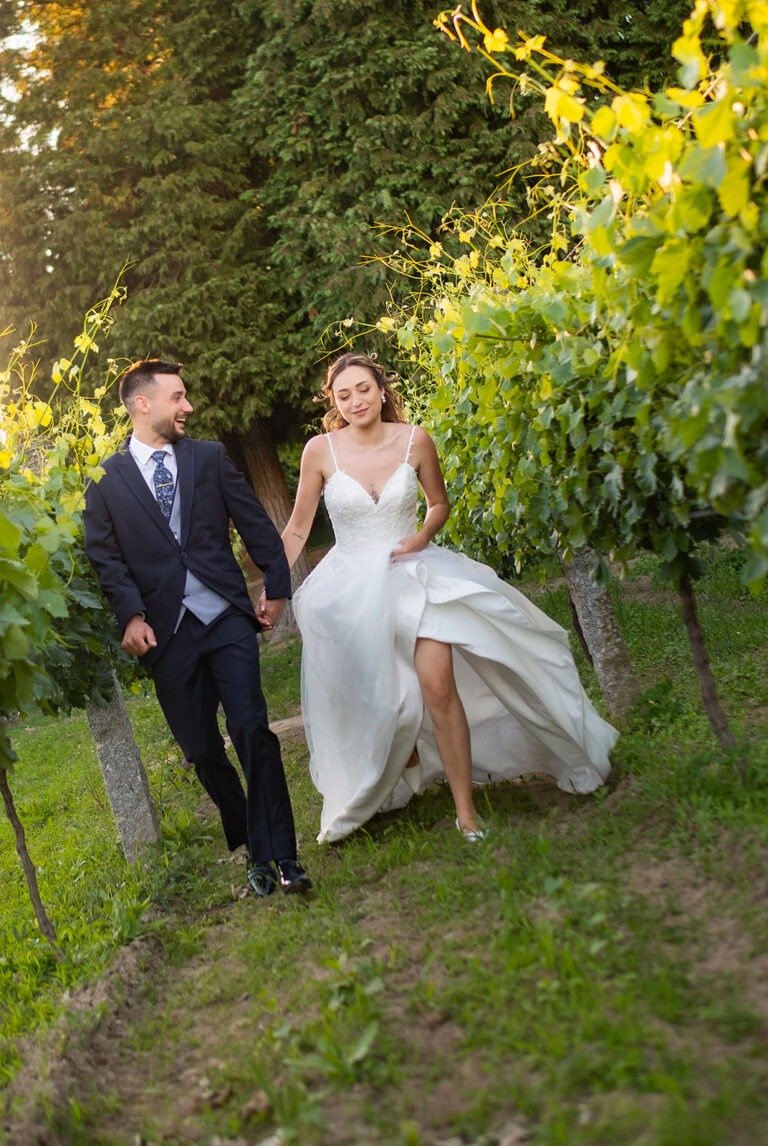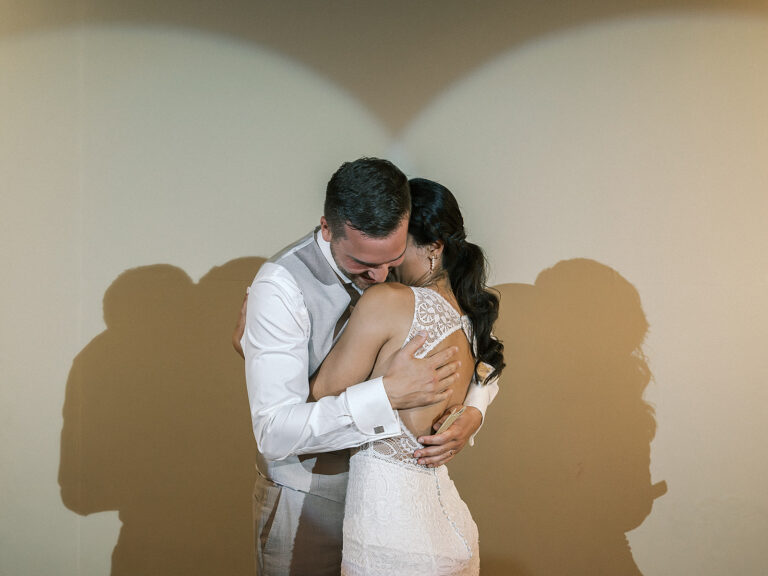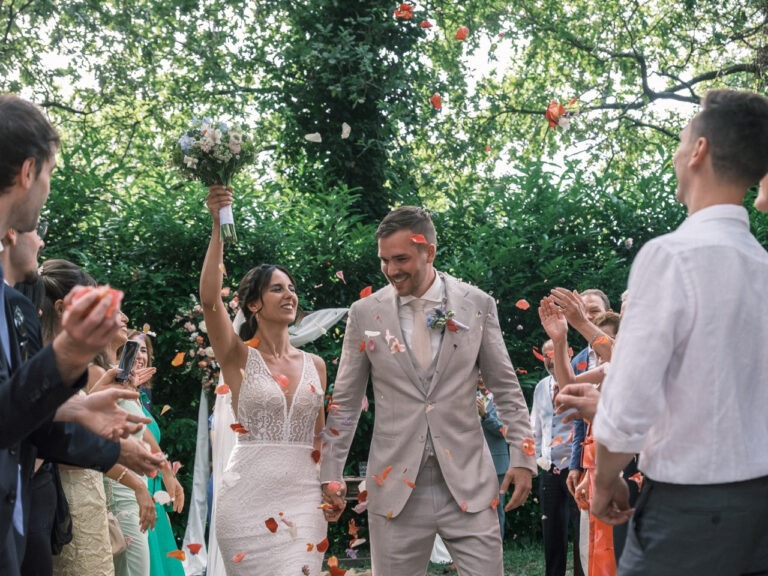
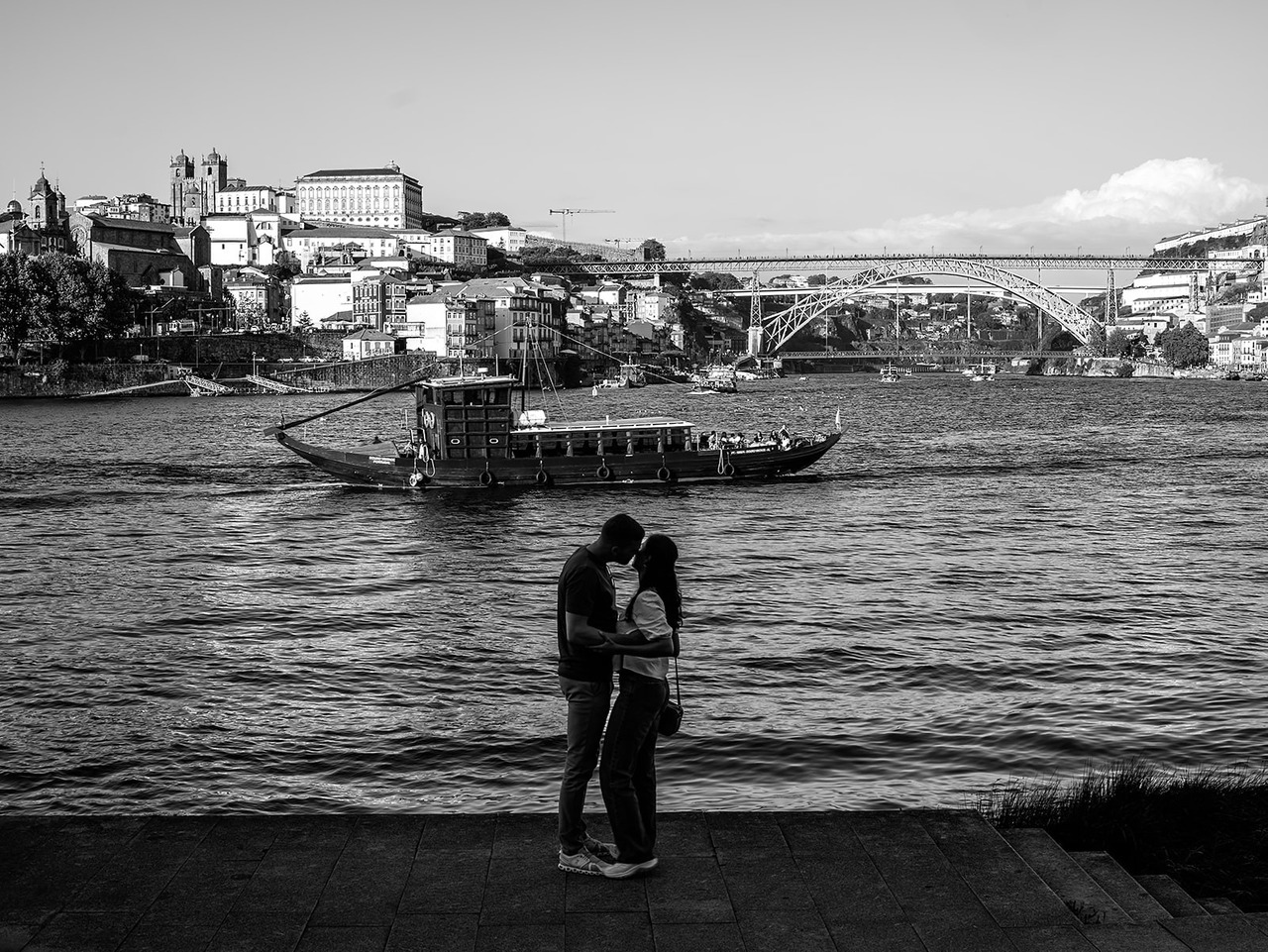
Getting Married in Porto: The Complete Guide for Foreign Couples (2026)
TL;DR: Porto is Portugal’s quietest destination wedding city — fewer foreign weddings than the Algarve or Lisbon, but with arguably better venues per capita, easier flights, and the Douro Valley an hour away. This guide walks you through every decision in the order you’ll face it: when to come, where to marry, how much it costs, what’s legally required, and how to plan it from another country. I’m a documentary wedding photographer based in Vila Nova de Gaia (across the river from Porto). I’ve shot 200+ weddings, including foreign couples from the UK, US, Ireland, Brazil, France, Spain, Germany, and the Netherlands. This is what I tell them.
I keep being asked the same question: “Why Porto and not the Algarve?”
The honest answer is that Porto is harder to find. The Algarve has had an English-speaking wedding industry for thirty years; almost any wedding planner in London or New York can name three Algarve venues. Porto is newer to this game. The trade-off is that the city is denser with serious venues — historic palaces, Douro vineyards, design hotels overlooking the river — and the prices for the same caliber of place are 20–30% lower than the Algarve in 2026.
Couples who choose Porto usually have one of three reasons. Either they want a city wedding with cobblestone streets and gothic cathedrals (Lisbon does this too, but Porto is smaller and more walkable for guests). Or they want the Douro Valley for a vineyard wedding, and Porto is the airport. Or they have a family connection to the North — a Portuguese grandparent, a wine-importing parent, an old friendship.
Whichever you are, this guide walks you through every major decision in the order you’ll face it. I link out to deeper guides where one section can’t possibly be enough.
Should you actually marry in Porto?
A practical comparison before you commit:
| Porto & North | Lisbon | Algarve | |
|---|---|---|---|
| Venue cost (€/person) | €75–€175 | €110–€220 | €130–€260 |
| Best months | May, June, September | May, June, September | Apr–Oct |
| English fluency | Good | Excellent | Excellent |
| Direct flights | EU + US/CA/BR | Wider routes | Mostly via Lisbon |
| Spring/autumn rain risk | Higher | Medium | Low |
| Guest experience | Authentic, less polished | Cosmopolitan, urban | Resort, beach |
| Hen / stag scene | Mild | Active | Intense |
If you want Mediterranean weather guaranteed, the Algarve is the safer bet. If you want architecture and old Europe, Porto wins. If you want a guest experience your friends won’t forget, the Douro Valley is unmatched in Portugal.
When to come (and when to definitely not come)
Northern Portugal has four distinct seasons — unusual for a Mediterranean country, and the most common surprise for foreign couples.
The reliable months are May, June, and September. Temperatures sit between 21°C and 28°C, evenings are warm enough for outdoor receptions, and rainfall is minimal. May has the freshest greenery; June has the longest daylight (sunset around 21:30); September has lower crowds, vintage starting in the vineyards, and warm river light that’s exceptional for photography.
July and August are technically peak season but I argue against them. Temperatures can hit 35°C in the Douro Valley. Outdoor ceremonies before 18:00 are uncomfortable for guests. Hotels charge premium rates because of summer tourism. If you do choose July/August, build the timeline around late afternoon — ceremony at 18:00, dinner at 21:00, dancing until 03:00.
October is the wild card. First two weeks are often beautiful — golden light, cool evenings, vineyards turning red. After mid-October the rain risk climbs sharply. Have a Plan B indoors.
November to March: rain, cold, short days. Couples occasionally choose January for indoor weddings at hotels (Yeatman, Vila Foz). Charming in its own way, but not the typical destination wedding.
A planning shortcut: book your weather Plan B first. Tents, indoor backups, covered terraces. The couples who stress least are the ones who stop trying to control the sky.
How much it costs
I built a wedding budget calculator that gives you a personalized estimate in 2 minutes — but here are the broad numbers for foreign couples in 2026:
- Intimate (10–30 guests): €15,000–€30,000
- Small (50–80 guests): €25,000–€45,000
- Mid-size (100–150 guests): €35,000–€70,000
- Large (200+ guests): €60,000–€120,000+
These ranges assume the couple flies in, stays 4–7 nights, has the rehearsal dinner and welcome event, and includes vendors, photography, and stationery. They do not include guests’ flights or hotels.
The biggest cost variable isn’t size — it’s the venue tier. A 100-guest wedding at Quinta Pacheca runs around €40,000 total. The same 100 guests at The Yeatman runs closer to €70,000. The catering quality is comparable; what you’re paying for at the top end is the location and the staff-to-guest ratio.
Choosing the venue (the decision that frames everything else)
Almost every other choice flows from your venue. Date availability, guest experience, photography style, even what your invites look like — they all follow from where you marry. So choose this first.
Five categories of venue work for foreign couples in Porto and the North:
1. The historic Douro estates. Quinta Pacheca, Quinta da Pacheca, Quinta do Vallado, Six Senses Douro. Vineyards as the backdrop, river views, the option to charter a Douro boat for guests. Ideal for couples whose guests will travel and stay 3–5 nights. Drive time from Porto: 60–90 minutes.
2. The Porto luxury hotels. The Yeatman (5-star with the city’s most famous view across to Porto), Vila Foz (boutique seafront), Pestana Palácio do Freixo (an 18th-century palace converted to hotel). All do weddings beautifully. Ideal for couples whose guests want city + comfort + zero logistical work.
3. The historic palaces and quintas around Porto. Casa de Calçada, Casa da Insua, Solar de Cambra, dozens more. Traditional, often family-owned, more affordable than the luxury hotels but still with full service. Ideal for couples wanting old-Portugal authenticity.
4. Alternative spaces. Lofts in the city, restaurants with private rooms, vineyards a short drive from town that aren’t on the standard wedding-planner list. Cheapest tier, requires more coordination from the couple but yields the most original celebrations.
5. Religious and civil-only venues for elopements. The Sé do Porto (cathedral). The Conservatória itself. A private terrace with 6 chairs.
When you visit (and you should, even briefly): walk the venue at the actual time of day your ceremony will be, not at noon when wedding planners book site visits. Light at 17:00 in May is different from 17:00 in September. Stand where you’ll stand for vows. The space tells the truth.
The legal side (in 60 seconds)
Foreign couples can legally marry in Portugal. The process takes 4–8 weeks of preparation, costs €120–€200 in fees, and requires apostilled documents from your home country.
The complete walkthrough — including country-specific document requirements for the UK, US, Ireland, Canada, Brazil, France, Spain, Germany, the Netherlands, and others — is in my civil wedding legal guide.
The shortest summary I can give:
- Most couples handle the legal civil ceremony at the Conservatória do Registo Civil the day before or the morning of their celebration, then have a symbolic ceremony at the venue with their officiant of choice.
- Or, increasingly common: civil ceremony at home before flying to Portugal, with only the symbolic ceremony in Porto.
- Or: full civil ceremony at the Portuguese venue (some are licensed for civil marriages).
There are tax and inheritance implications to which option you pick. €150 of Portuguese family-lawyer time before the wedding will save five-figure problems later if either of you owns property abroad.
The 12-month timeline
Foreign couples who book photography one year out usually feel relaxed throughout. Couples who start six months out usually feel rushed. This is the timeline I see work:
12+ months out:
- Decide on Porto vs Lisbon vs Algarve
- Choose venue category and 3–4 candidate venues
- Set the date with a 2-week flexibility window
- Start gathering home-country marriage documents
10 months out:
- Visit Porto (3–5 days) — see venues, taste food, walk the city
- Confirm venue and sign deposit
- Book photographer (the good ones are reserved 12–18 months out for peak dates)
- Book hotel block for guests at 2–3 hotels at different price points
8 months out:
- Book wedding planner if using one
- Start home-country document procedures (CNI / Single Status Affidavit / etc.)
- Send save-the-dates with hotel blocks listed
6 months out:
- Book florist, music, transport
- Get all home-country documents apostilled
- Decide ceremony language and any bilingual elements
4 months out:
- Send invitations
- Final menu tasting (if doing one)
- Book hair and makeup trial
8 weeks out:
- File processo preliminar at the Portuguese Conservatória
- Get documents translated by a Portuguese sworn translator
- Final guest count to venue
4 weeks out:
- Final timeline meeting with photographer and planner
- Welcome bag preparation
1 week out:
- Land in Porto. Rest. The wedding takes care of itself if everything above is done.
Logistics that catch foreign couples off-guard
A short list of things that surprise people:
Flights. Porto airport (OPO) has direct flights from London, Dublin, Manchester, Edinburgh, Paris, Madrid, Barcelona, Brussels, Amsterdam, Frankfurt, Munich, Geneva, New York (JFK and Newark), Toronto, São Paulo, Rio, and Recife. Flights connecting from smaller cities usually go via Lisbon or Madrid.
Driving. You can drive in Portugal with most foreign licenses for up to 6 months. Roads are excellent. Tolls are heavy on the major motorways (A1 Lisbon-Porto: ~€21 each way). Rural roads in the Douro are narrow and winding — guests who haven’t driven in Europe before should be warned.
The wedding day starts late. Ceremony at 16:00–17:00 is normal in Porto. Dinner at 20:00. Dancing until 03:00 or later. Foreign couples used to North American 14:00 ceremonies often resist this. Then they accept it. Then they love it.
Catering portions are large. A Portuguese wedding menu typically has 2 starters, an entrada, a main, a dessert, and the dessert table. If you’re doing a tasting, eat lightly that morning.
Sunday weddings exist but are unusual. Saturday is the default. Friday is increasingly popular among foreign couples because guests turn it into a long weekend.
Bridal preparation can be done on-site or in your hotel. Top hotels have bridal suites; venues like Quinta Pacheca have prep rooms. If you’re staying somewhere small with poor light, ask your photographer in advance — they may suggest moving prep to a friend’s hotel suite.
Tipping. Service is included in venue catering bills. Tipping individual servers is not expected but appreciated. For the photographer, planner, hair/makeup — not expected; a thank-you note matters more.
Vendors: how to choose, and red flags
For most foreign couples, the wedding planner is the central vendor. They build the team. A few things to ask any planner you talk to:
- How many foreign weddings do you actually plan per year? You want at least 8–10. Below that, your wedding will be a learning exercise.
- Do you work with a fixed list of vendors or open? Both have pros. Fixed lists mean smoother coordination; open lists mean more options.
- What’s your communication rhythm in the final 8 weeks? You want weekly check-ins minimum, daily in the final 2 weeks.
- Are you available to attend the wedding day, or do you hand off to a coordinator? Attendance varies by tier; both can work, but you should know.
For photographers (declaring my bias): look at full galleries of complete weddings, not curated portfolios. Look for the unposed moments — guest expressions, the kiss between the parents, the awkward cousin. If a portfolio shows only sunset portraits and styled details, that’s what you’re going to receive.
For florists: ask for in-season recommendations. Porto’s local flowers in May are different from September. Locally-sourced florals are 30–40% cheaper than imported.
For music: live trio for the ceremony, DJ for the party, is the most common setup. Live bands run €2,500–€5,000+ for the night.
What about the photography (since you ask)
Documentary wedding photography is what I do. The honest version: I focus on the moments that happen between the planned moments. The grandfather watching the bride walk in. The friend who can’t stop laughing at dinner. The kiss outside the church before the family group photo.
I don’t pose. I won’t direct your wedding party for staged shots. I will arrive early, blend in, and leave with 700–1000 frames of a day that actually happened.
That style isn’t for everyone. If you want fashion editorial, I’ll happily refer you to colleagues who do that brilliantly. If you want all your guests recognizable, smiling, looking at the camera in 200 perfect images — that’s a different kind of photographer.
For couples whose priority is what actually happened: I respond to every email personally, usually within 24 hours. We can do a 30-minute video call to see if our approach matches. I’m based in Vila Nova de Gaia, 10 minutes from Porto city center, and I work across all of Northern Portugal and the Douro.
Frequently Asked Questions
How far in advance should we plan a wedding in Porto?
12 months is the standard for foreign couples. 18 months for peak dates (June Saturdays, September Saturdays) at top venues like The Yeatman.
Can we get married in English?
Yes. The legal civil ceremony is in Portuguese, but the symbolic ceremony at your venue can be entirely in English. Most officiants in Porto are bilingual.
Is Porto safe?
Among the safest cities in Europe. Petty pickpocketing exists in the most touristy areas of Ribeira and Aliados; nothing more.
Can our pets attend?
Most outdoor venues yes; hotels usually no. Quintas in the Douro are dog-friendly; The Yeatman and Pestana Palácio do Freixo are not.
What about kids?
Portuguese wedding culture welcomes children. Most venues set up a small play area or hire babysitters on request. Some couples designate “adults-only after dinner” — this works fine; explain it in the invitation.
Do we need a wedding planner?
Not necessarily. Venues like The Yeatman and Six Senses Douro have in-house wedding teams that can plan your full event. A separate wedding planner adds value when you have multiple venues, complex logistics across 3+ days, or specific style preferences not in the venue’s standard playbook.
How many days should our guests plan to stay?
4 nights minimum. 5–6 nights is the sweet spot. The wedding party arrives Wednesday/Thursday, rehearsal dinner Friday, wedding Saturday, brunch Sunday, departures Sunday/Monday.
What’s the vegetarian/vegan situation?
Portuguese cuisine is heavy on seafood and meat, but venues handle vegetarian/vegan well if you flag it 2 months ahead. Vegan weddings are still uncommon enough that you should ask the chef directly, not just check a box on the form.
Will my guests need visas?
EU/UK/US/Canadian citizens don’t need visas for stays under 90 days. Brazilian, Indian, and most other passports require Schengen visas — check 4+ months in advance.
What if it rains?
Every venue I work with has an indoor backup. Check yours has one for the ceremony, not just dinner. The 24h forecast is reliable in Porto; you’ll know whether to flip on Friday morning.
The most useful thing I can tell you
Two things that make the biggest difference between weddings I love photographing and weddings I find harder:
One: the couples who stop trying to control the day around 2 weeks out are happier on it. The decisions are made. The vendors are professionals. Trust them.
Two: spend the first 30 minutes of the morning with each other, before the photographer arrives, before the makeup chair, before the family. Foreign couples often skip this because they’re stressed about timelines. The 30 minutes saves the day.
If you’d like to talk about photography for your Porto wedding, contact me here — I respond to every message personally, in English.
If you’re at the start of planning and just want a budget sense, my calculator takes 2 minutes.
If you’re ready to dive deeper, the civil wedding legal guide is the most-asked-about topic.
The complete guide series
If you want to dive into specific aspects of planning a Porto wedding, here’s the rest of the guide series — each goes deeper than this overview can:
- Civil Wedding in Portugal: Legal Guide for Foreign Couples — country-specific document requirements (UK/IE/US/CA/BR/FR/ES/DE/NL), apostille process, the processo preliminar
- 12 Best Wedding Venues in Porto, Douro Valley & Northern Portugal — venue-by-venue breakdown with prices, capacities, and pros and cons
- Elopement in Porto: A Practical Guide for Couples Eloping Abroad — the legal shortcut, best ceremony locations, realistic costs across three tiers
- Douro Valley Wedding: A Complete Guide for Foreign Couples — Douro-specific logistics, estates, timing, and the drive from Porto
- Best Time of Year to Get Married in Porto — month-by-month breakdown with temperatures, light times, costs, and weather risk
- Choosing a Wedding Photographer in Portugal — questions to ask, red flags, and realistic 2026 prices
- Documentary vs Traditional Wedding Photography — what each style looks like, when each works best, how to choose
- Wedding Budget Calculator — get a personalized estimate in 2 minutes
The wedding you’ll have in Porto will look different from the wedding you’d have at home. That’s the point. The light, the food, the way the river holds the light at evening — none of it is replicable elsewhere. Choose carefully. Plan honestly. And then let it go.